
A car battery that goes flat again and again is frustrating. It can leave you stuck at work, outside a supermarket, or on a cold driveway.
Most drain problems have a clear cause, and many have a simple fix. This guide explains the usual culprits and how to narrow them down.
What Drains a Car Battery Overnight?
A healthy battery should still start the engine after a night parked. If it does not, something usually draws power while the ignition is off.
Lights and Accessories Left Running
- Interior lights, boot lamps, or headlights that stay on
- Dash cams, alarms, or phone chargers that keep drawing power
- A glovebox or footwell light that never switches off
Parasitic Drain From Electrical Faults
A parasitic drain is a small, constant current that continues after you switch off the engine. A faulty module, a stuck relay, or a damaged wire can cause one. Drivers usually notice the problem only when the battery goes flat.
How to Check for a Parasitic Drain
Once the car locks and its modules go to sleep, a healthy car draws only a small current, usually well under 50 milliamps. A multimeter set to measure current can reveal a higher draw, but the test involves disconnecting the battery. Ask a garage to carry it out if you are unsure.
Why Does the Battery Go Flat on Short Trips?
Starting the engine uses a large burst of power. The alternator refills the battery while the engine runs. A trip of only a few minutes may not restore enough charge, especially in winter.
How Do Cold and Heat Affect a Car Battery?
Temperature has a strong effect on battery performance. Most cars use a lead-acid battery, and its output drops in cold weather. Engine oil also thickens in low temperatures, so the starter needs more power to turn the engine over.
Heat causes a different problem. High temperatures speed up internal wear, which can shorten battery life.
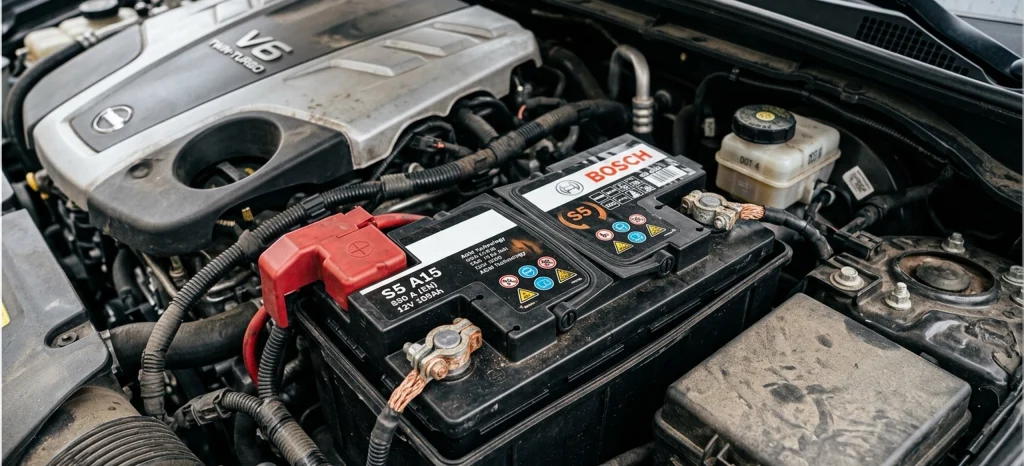
Could Loose Terminals or a Weak Alternator Cause the Problem?
Two faults often mimic a drained battery:
- Corroded or loose terminals block current from flowing properly. Look for white or green powder around the clamps.
- A weak alternator fails to recharge the battery while you drive. Dim headlights, a battery warning light, and a whining noise often point to this fault.
Which Fixes Should You Try First?
Work through these checks before you buy a new battery:
- Confirm that every light and accessory switches off when you remove the key.
- Clean the terminals and tighten the clamps.
- Measure the voltage with a multimeter. A fully charged 12-volt battery usually reads about 12.6 volts with the engine off.
- Take a drive of 30 minutes or more so the alternator can recharge the battery.
- Use a smart charger with a maintenance mode if the car sits unused for weeks.
- Ask a garage to test the charging system if the battery keeps going flat.
When Should You Call for Roadside Help?
Call for help when the battery goes flat repeatedly, the warning light stays on, or you cannot find the cause. Repeated jump starts can strain the charging system and hide a fault that needs proper diagnosis.
If the battery has died and needs replacing, our car battery replacement service can help across Leeds and West Yorkshire.
Stop the Drain Before It Strands You Again
A battery that keeps dying usually points to a drain, a poor connection, or a charging fault. Test the basics, fix what you can, and get a professional check if the problem returns.
Call 07562 539450 at any hour to agree a fixed price before dispatch. Need a quote for non-urgent work? Contact us and request a free quote.
Learn more about Silver Recovery 24/7, a vehicle recovery company based in Leeds.
Frequently Asked Questions
How can I tell if my car battery is draining or failing?
A draining battery often works normally after a jump start and a longer drive. A failing battery struggles to start the engine even after a full charge.
What voltage should a car battery show when parked?
A fully charged 12-volt battery usually reads about 12.6 volts with the engine off. Readings below 12.4 volts suggest the battery needs charging or testing.
Can a parked car drain its battery?
A parked car can drain its battery through alarms, interior lights, or a faulty electrical component. Modern cars with many electronic systems can also draw small amounts of power while parked.
How often should I charge a car that sits unused?
Connect a smart charger if the car stands unused for several weeks. A maintainer keeps the battery topped up without overcharging it.
Is it safe to jump start a car with a flat battery?
Jump starting is generally safe when you follow the handbook steps and connect the leads in the correct order. Seek a professional check if the car needs jump starts repeatedly, because the underlying fault remains.